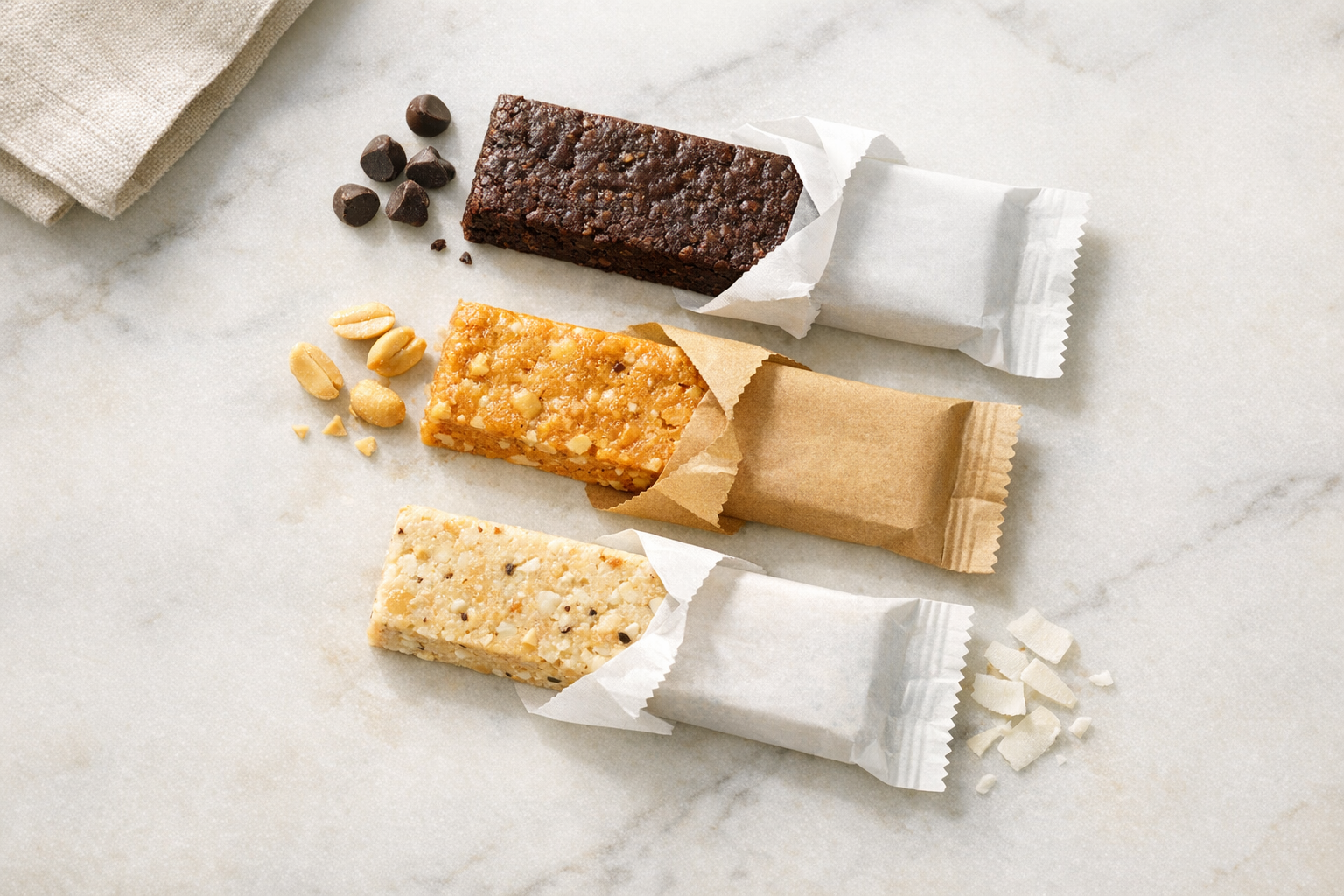
We tested 5 different bullet point approaches with 500 AI shoppers. The winner outsold the worst performer by 45%. The difference wasn’t what was said – it was how it was said.
That single finding changed how we think about product listing optimisation. Not the images. Not the title. Not the price. The bullet points – those 3-5 lines of text that most sellers treat as an afterthought – determined whether shoppers added to cart or scrolled past.
In this guide, I’m sharing the data from that experiment and hundreds of others we’ve run at Saucery. You’ll get the exact formulas, the hierarchy of what works, and the platform-specific strategies that drive real conversion lifts.
Why Bullet Points Are the Highest-Leverage Listing Element
Here’s the uncomfortable truth most e-commerce brands miss: your title gets the click, but your bullet points close the sale.
Think about how shoppers actually browse. They search. They scan titles. They click something that looks relevant. And then – in the 3-7 seconds before they decide to keep reading or bounce – they scan your bullet points.
This isn’t speculation. It’s how the platforms are designed.
Amazon: 5 Bullets, First 2-3 Visible Without Scrolling
On Amazon, you get exactly 5 bullet points in your product listing. On desktop, all 5 are typically visible in the right column next to the product images. On mobile – where over 60% of Amazon shopping now happens – only the first 2-3 bullets appear before the “See more” fold.
That means your first two bullets carry disproportionate weight. They need to do the heavy lifting of communicating your primary value proposition and addressing the shopper’s biggest concern.
Amazon’s own Style Guide recommends keeping bullets under 200 characters each. But character count matters less than information density. A 150-character bullet that communicates a specific, measurable benefit will outperform a 200-character bullet packed with generic adjectives every time.
Walmart: 3-10 Key Features, Visible on Search Results
Walmart’s marketplace gives sellers something Amazon doesn’t: bullet point visibility directly on the search results page. Their “Shelf Description” feature shows 3+ key features right in the search grid, before shoppers even click through to your listing.
This changes the strategic calculus entirely. On Amazon, your title has to do all the work of earning the click. On Walmart, your key features help earn the click AND close the sale. You get 3-10 key features in your full listing, and the Walmart Listing Quality guidelines reward specificity and completeness.
eBay: No Formal Bullets – Description Serves This Role
eBay doesn’t have a dedicated bullet point field. Instead, your item description serves the role of communicating key features and benefits. Smart eBay sellers use HTML-formatted bullet lists within their descriptions to replicate the scanning experience shoppers expect from other platforms.
The item specifics section partially fills this gap, but it’s structured data rather than persuasive copy. The description remains your primary conversion tool on eBay.
Shopify and Direct-to-Consumer: Unlimited But Still Critical
On your own Shopify store, you have unlimited space for bullet points and benefit statements. But “unlimited” doesn’t mean “unstructured.” The same principles apply: scannable, specific, benefit-focused copy in bullet format converts better than paragraphs of flowing text.
The Data: Optimised Bullets Convert 20-35% Better
Across industry benchmarks, listings with optimised bullet points convert 20-35% better than those with generic or poorly structured bullets. In our own testing across 500+ experiments at Saucery, the range is even wider – we’ve seen lifts of 45% or more when the right claim meets the right audience.
This isn’t a marginal improvement. For a product doing $50,000/month in revenue, a 25% conversion lift from better bullets is worth $12,500/month in additional revenue. No ad spend increase. No new product development. Just better words in the right order.
The Hierarchy of Bullet Point Effectiveness
Not all bullet point strategies are equal. Through hundreds of discrete choice experiments at Saucery – where we present different claim variations to panels of AI shoppers calibrated against real purchase behaviour – we’ve identified a clear hierarchy of what works.
Here’s the ranking, from most effective to least:
1. Outcome Beats Feature (+28%)
The single biggest lever in bullet point copy is shifting from what your product IS to what your product DOES for the customer.
In our testing, “Visible Results in 7 Days” outperformed “Contains Retinol” by 28%. Both communicate the same underlying product attribute. But one speaks the language of the customer’s desired outcome, while the other speaks the language of the product formulator.
This maps to the classic features-vs-benefits framework, but the magnitude surprised us. A 28% preference shift from simply reframing the same claim is enormous.
2. Certifications Beat Self-Claims (+22%)
“Whole30 Approved” outperformed “Clean Eating Friendly” by 22% in our experiments.
Why? Third-party validation removes the shopper’s need to evaluate your claim independently. When you say “Clean Eating Friendly,” the shopper has to decide whether to trust your definition of clean eating. When you say “Whole30 Approved,” the evaluation is already done by a trusted authority.
This has massive implications for product development and certification strategy. If you’re choosing between investing in marketing copy or investing in a relevant certification, the certification pays for itself many times over in conversion lift.
3. Absence Claims Beat Presence Claims (+18%)
“No Added Sugar” outperformed “Naturally Sweet” by 18%.
This is counterintuitive. Most brand teams instinctively reach for positive framing – what the product HAS rather than what it DOESN’T have. But shoppers are often motivated more by avoidance than by aspiration, particularly in food, beverage, and personal care categories.
The psychology is straightforward: absence claims are binary and verifiable. Either there’s added sugar or there isn’t. “Naturally Sweet” is subjective and requires trust. “No Added Sugar” is a fact that can be checked on the nutrition panel.
4. Numbers Beat Adjectives (+15%)
“6 Ingredients” outperformed “Simple Ingredients” by 15%.
Numbers create specificity. Specificity creates credibility. When you say “Simple Ingredients,” you’re making a subjective claim that every competitor also makes. When you say “6 Ingredients,” you’re making a falsifiable statement that positions you precisely in the competitive landscape.
This principle extends beyond ingredient counts. “Lasts 8 Hours” beats “Long-Lasting.” “Charges in 20 Minutes” beats “Fast Charging.” “Fits 15″ Laptop” beats “Spacious Interior.”
5. Specificity Beats Generics (+12%)
“11g Protein Per Bar” outperformed “High Protein” by 12%.
The baseline effect: any specific claim outperforms any generic version of the same claim. “High Protein” could mean 6g or 30g depending on the category and the brand. “11g Protein Per Bar” means exactly one thing, and the shopper can immediately evaluate whether it meets their needs.
This is the foundation all other principles build on. Before you optimise for outcome framing or absence claims or certifications, make sure every bullet point passes the specificity test: could a competitor say the exact same thing? If yes, it’s not specific enough.
The 5 Bullet Point Formulas That Work
Based on our experiment data, here are five proven formulas that consistently drive higher purchase intent. Each one incorporates multiple principles from the hierarchy above.
Formula 1: The Specific Proof
Structure: [Number] + [Measurable Claim] + [Benefit]
Example: “11g of grass-fed whey protein per bar – keeps you full for 4+ hours”
This formula works because it stacks specificity (11g), a quality signal (grass-fed whey), precision (per bar), and an outcome benefit (full for 4+ hours). The shopper gets a complete picture in a single line.
More examples:
- “500ml capacity, double-wall vacuum insulated – keeps drinks cold for 24 hours, hot for 12”
- “18 organic superfoods per scoop – replaces your morning multivitamin”
- “2,400 lumens with 98 CRI – colours look exactly as they do in natural sunlight”
The key: the number comes first (specificity hook), the measurable claim provides evidence, and the benefit tells the shopper why they should care.
Formula 2: The Absence Guarantee
Structure: No [Thing They Fear] + [What That Means For Them]
Example: “Zero artificial sweeteners – just monk fruit and stevia for clean energy”
This formula leverages the absence claim advantage (+18%) while immediately pivoting to a positive outcome. You acknowledge the fear, remove it, and replace it with something desirable.
More examples:
- “No synthetic fragrances or parabens – safe for sensitive skin and newborns”
- “Zero added sugar, zero sugar alcohols – no bloating, no blood sugar spike”
- “No fillers, no proprietary blends – every ingredient at a clinically studied dose”
The key: name the specific fear (not just “free from chemicals” – which chemicals?), then immediately explain the positive implication.
Formula 3: The Authority Signal
Structure: [Certification/Award] + [What It Proves]
Example: “Whole30 Approved and Paleo Certified – meets the strictest clean-eating standards”
This formula stacks the certification advantage (+22%) with an explanation of what that certification means for the shopper. Many certifications are familiar as logos but unclear in their requirements – the explanation bridges that gap.
More examples:
- “B Corp Certified since 2019 – verified social and environmental performance standards”
- “Winner, Good Housekeeping 2024 Beauty Award – tested and recommended by dermatologists”
- “USDA Organic and Non-GMO Project Verified – third-party tested at every stage of production”
The key: the certification alone isn’t enough. You need to translate it into what it means for the buyer’s specific concern.
Formula 4: The Outcome Promise
Structure: [Specific Result] + [Timeframe] + [How]
Example: “Visible reduction in fine lines within 14 days – clinically tested on 200 women”
This is the highest-performing formula in our testing because it combines the outcome advantage (+28%) with specificity and social proof. The timeframe creates urgency and believability – “eventually” is not compelling, but “14 days” is testable.
More examples:
- “Noticeably whiter teeth in 7 days – enamel-safe formula used by 50,000+ customers”
- “Lawn greening visible within 72 hours – slow-release nitrogen feeds for 8 weeks”
- “Falls asleep 40% faster on average – melatonin-free formula backed by 3 clinical trials”
The key: the result must be specific and observable, the timeframe must be believable, and the “how” should provide a mechanism or proof point.
Formula 5: The Comparison Win
Structure: [Better Than Alternative] + [Proof]
Example: “3x more absorbent than leading paper towels – independent lab tested”
Comparative claims are powerful because they do the shopper’s evaluation work for them. Instead of requiring the buyer to assess your claim in isolation, you provide the competitive context.
More examples:
- “50% lighter than traditional cast iron – same heat retention, easier to handle”
- “Lasts 2x longer than conventional batteries – independently verified by UL”
- “4x more concentrated than standard detergent – one bottle replaces four”
The key: the comparison must be provable (“independent lab tested,” “independently verified”), and it should compare against what the shopper is currently using, not an obscure competitor.
Platform-Specific Bullet Point Strategies
The formulas above work everywhere, but the implementation details vary by platform. Here’s how to adapt your approach.
Amazon: Front-Load Your Best Claims
Amazon gives you exactly 5 bullet points with a recommended maximum of 200 characters each. The Amazon Product Detail Page Rules specify formatting requirements – no promotional language, no pricing, no shipping details in bullets.
Strategy:
- Bullet 1: Primary USP using the Specific Proof or Outcome Promise formula
- Bullet 2: Address the #1 customer concern using the Absence Guarantee formula
- Bullet 3: Authority Signal (certification, award, or social proof)
- Bullet 4: Practical details (size, quantity, compatibility) using the Specific Proof formula
- Bullet 5: Guarantee or risk reversal
Front-loading matters because on mobile, bullets 4 and 5 are hidden below the fold. Your two strongest claims must appear first.
Character count tip: Amazon’s algorithm indexes your bullet text for search. Include relevant keywords naturally, but never at the expense of readability. A well-optimised bullet is readable first and keyword-rich second.
Walmart: Leverage Search Result Visibility
Walmart’s Shelf Description appears directly in search results, giving your bullets a dual role: earning the click AND closing the sale. Your Walmart Listing Quality Score rewards complete, specific key features.
Strategy:
- Shelf Description (3 bullets visible in search): Use your three strongest claims – these compete with other listings for the click
- Key Features (3-10 bullets in listing): Expand on details, specifications, and secondary benefits
- Walmart rewards specificity in their search algorithm more heavily than Amazon – exact measurements, materials, and certifications help search ranking
The unique opportunity: because bullets are visible in search results, test different Shelf Description variations to optimise both click-through rate AND conversion rate simultaneously.
Shopify: Use HTML Formatting for Rich Bullet Experiences
On your own Shopify store, you’re free from character limits and platform restrictions. But freedom isn’t always an advantage – it tempts you to write too much.
Strategy:
- Use 5-7 bullets maximum, even though you could use more
- Each bullet can be longer (2-3 lines) because you control the reading experience
- Use HTML formatting: bold the lead claim, regular weight for the explanation
- Add icons or checkmarks via CSS for visual scanning
- Link certifications to their verification pages for added credibility
- Consider expandable/collapsible bullet sections for products with many features
The advantage of Shopify is A/B testing capability. Use apps like Neat A/B Testing or Google Optimize to test different bullet point approaches directly.
eBay: Structured Bullets in Unstructured Space
eBay’s lack of a formal bullet field is a disadvantage AND an opportunity. Most eBay sellers write flowing paragraphs that shoppers don’t read. By formatting your description with clear HTML bullets, you stand out.
Strategy:
- Open your description with 5 bullet points in bold HTML formatting
- Use the same hierarchy and formulas – the principles don’t change by platform
- Leverage Item Specifics for searchability, but rely on description bullets for persuasion
- eBay’s Item Specifics complement but don’t replace persuasive bullet copy
Etsy: Weave Benefits Into Story Format
Etsy indexed description content for search starting in 2022, making your description both a search ranking factor and a conversion tool.
Strategy:
- Open with 3-5 benefit bullets (Etsy shoppers still scan before reading)
- Follow with a story-format description that weaves in keywords naturally
- Etsy’s audience values craftsmanship and process – your Authority Signal might be “hand-poured in small batches” rather than a formal certification
- Include sizing/dimension bullets separately from benefit bullets
Order Matters: Which Bullet Goes First?
The sequence of your bullet points isn’t arbitrary. Based on our testing and Nielsen Norman Group’s research on reading patterns, here’s the optimal order:
Position 1: Primary USP / Biggest Differentiator
Your first bullet should answer: “Why should I buy THIS instead of the other options?” This is your strongest claim – the one thing that makes you genuinely different.
Use the Specific Proof or Outcome Promise formula here. You need maximum impact in the position that gets the most attention.
Example: “Only 6 whole-food ingredients – the cleanest protein bar on the market”
Position 2: Address the Customer’s Biggest Fear
Your second bullet should answer: “What’s wrong with it?” Every product category has a known objection. For protein bars: “Does it taste chalky?” For skincare: “Will it irritate my skin?” For electronics: “Will it break in 6 months?”
Use the Absence Guarantee formula. Name the fear and eliminate it.
Example: “Zero chalky aftertaste – tastes like a real chocolate brownie (4.8 star average from 2,400+ reviews)”
Position 3: Social Proof / Certification
Once you’ve made your claim (bullet 1) and removed the objection (bullet 2), provide third-party validation. This is where certifications, awards, expert endorsements, or review data go.
Use the Authority Signal formula.
Example: “Whole30 Approved, Paleo Certified, and recommended by 500+ registered dietitians”
Position 4: Practical Details
Now that the shopper is emotionally engaged, provide the rational information they need to complete the purchase. Size, quantity, compatibility, dimensions, materials – whatever practical question remains.
Use the Specific Proof formula to make even practical details compelling.
Example: “12 bars per box, 60g each – perfectly sized for your gym bag, desk drawer, or car console”
Position 5: Guarantee / Risk Reversal
Your final bullet removes the last barrier: “What if I don’t like it?” A strong guarantee or risk reversal statement can push undecided shoppers over the edge.
Example: “100% satisfaction guaranteed – if you don’t love the taste, we’ll refund every penny, no questions asked”
Why This Order Works: The Attention Decay Curve
Eye-tracking research consistently shows that attention decays as readers move down a page. The first bullet gets 80-100% of readers’ attention. By the fifth bullet, you’re down to 30-40%.
This means your strongest, most differentiating claims MUST come first. Save practical details and guarantees for later positions where the information is still useful but doesn’t need to be your hook.
The sequence also follows the buyer’s decision journey: Intrigue (USP) > Reassure (address fear) > Validate (social proof) > Inform (details) > De-risk (guarantee). Each bullet moves the shopper one step closer to adding to cart.
Common Bullet Point Mistakes
In our work testing listing copy for hundreds of brands, we see the same mistakes repeatedly. Here are the most damaging ones:
Mistake 1: Starting With Features Instead of Benefits
Bad: “Made with organic quinoa, chia seeds, and hemp hearts”
Better: “Complete plant protein from organic quinoa, chia, and hemp – all 9 essential amino acids in every serving”
Ingredients are features. Complete protein with all essential amino acids is a benefit. The shopper doesn’t buy quinoa – they buy nutrition.
Mistake 2: Using Corporate Language Instead of Buyer Language
Bad: “Utilising proprietary technology to deliver superior hydration performance”
Better: “Stays cold 3x longer than regular water bottles – still ice-cold after 24 hours”
Buyers don’t speak in press releases. They speak in outcomes they can visualise. Read your bullets aloud – if you’d never say it to a friend, don’t put it in your listing.
Mistake 3: Keyword Stuffing
Bad: “Protein bar high protein snack bar healthy snack fitness bar gym snack keto protein bar low carb protein bar”
Better: “20g protein, 4g net carbs, keto-friendly – the gym bag snack that actually tastes good”
Keyword stuffing damages both readability and conversion. Amazon’s A10 algorithm has long since evolved past keyword density. Write for humans first, then ensure keywords appear naturally.
Mistake 4: All Bullets Saying the Same Thing
Bad:
- “Premium quality materials”
- “Made with the finest ingredients”
- “Crafted to the highest standards”
- “Superior quality you can taste”
- “Uncompromising quality in every bite”
Five bullets that all say “it’s high quality” waste four bullet opportunities. Each bullet should communicate a DIFFERENT value proposition, addressing a different aspect of the buying decision.
Mistake 5: Not Using All Available Bullet Slots
On Amazon, you get 5 bullets. Use all 5. On Walmart, you can use up to 10 key features. Use at least 5-7.
Empty bullet slots are wasted real estate. Every unused bullet is a missed opportunity to address an objection, communicate a benefit, or differentiate from competitors. Jungle Scout’s analysis of top-performing Amazon listings found that 94% use all 5 available bullet slots.
Mistake 6: Generic Claims Every Competitor Also Makes
Bad: “Premium quality” / “Great taste” / “Customer satisfaction guaranteed”
Better: “Blind taste-tested against 6 competitors – chosen #1 by 73% of tasters”
The “swap test” is useful here: take your bullet point and paste it into a competitor’s listing. Does it still work? If yes, it’s not differentiated. Your bullets should be impossible to swap because they contain specific data, certifications, or outcomes unique to your product.
How to Test Which Bullets Convert
The hierarchy and formulas above are based on aggregate data across hundreds of experiments. But your specific product and audience may respond differently. Here’s how to test.
Test One Variable at a Time
The most common testing mistake is changing everything simultaneously. If you rewrite all 5 bullets and conversion goes up 20%, you don’t know which change drove the improvement.
Instead, test one bullet position at a time. Keep bullets 2-5 identical, and test 3-5 variations of bullet 1. Once you’ve optimised position 1, move to position 2.
This sounds slow, but it builds compounding knowledge. Each test tells you something specific about what your audience responds to.
AI Shoppers: Test 5 Bullet Sets in Minutes
Traditional A/B testing requires traffic, time, and patience. A meaningful test on Amazon might take 2-4 weeks to reach statistical significance – and during that time, half your traffic is seeing the losing variation.
At Saucery, we use AI shoppers calibrated against real purchase behaviour to test bullet point variations before they go live. You can test 5 different approaches with 500 modelled shoppers in minutes, identify the winner, and launch with confidence.
This doesn’t replace live testing – but it eliminates obviously weak variations and narrows your options to the top 2-3 performers before you risk real traffic.
The “Swap Test” for Differentiation
Before you even run a formal test, apply this simple filter: take each of your bullet points and mentally paste it into your top competitor’s listing. Does it still make sense? Does it still sound true?
If yes, that bullet isn’t doing its job. It’s generic enough to belong to anyone, which means it’s not helping shoppers choose YOU specifically.
Every bullet should fail the swap test – meaning it’s so specific to your product that it would be false or irrelevant on a competitor’s listing.
The Metrics That Matter
When evaluating bullet point performance, track these metrics:
- Conversion rate (sessions to purchase): The ultimate measure. Better bullets = more purchases per visitor.
- Add-to-cart rate: A leading indicator. If add-to-cart goes up but purchase doesn’t, the issue is downstream (price, shipping, reviews).
- Unit session percentage: Amazon’s version of conversion rate. Compare against category averages.
- Time on page: Better bullets can increase engagement time, but the goal is conversion, not reading time.
Real Experiment Data: The Protein Bar Test
Let me walk through a real experiment we ran at Saucery to illustrate how these principles play out with actual data.
The Setup
We tested a protein bar listing with 5 different lead bullet point claims, holding everything else constant (same product image, same title, same price, same bullets 2-5). The only variable was the first bullet point.
Panel: 500 AI shoppers, calibrated to the US adult population, with grocery and snack purchasing behaviour.
The five variations:
- “Only 6 Ingredients” (Numbers + Absence framing)
- “11g Protein Per Bar” (Specificity + Numbers)
- “No Artificial Sweeteners” (Absence claim)
- “Whole30 Approved” (Certification)
- “Keeps You Full for 4 Hours” (Outcome promise)
The Results
- “Only 6 Ingredients” – 45.2% preference share (Winner)
- “11g Protein Per Bar” – 40.4% preference share
- “No Artificial Sweeteners” – 38.1% preference share
- “Whole30 Approved” – 35.8% preference share
- “Keeps You Full for 4 Hours” – 31.2% preference share
(Preference shares sum to more than 100% because this was a discrete choice experiment with multiple choice sets – each number represents the percentage of choice occasions where that variant was selected when presented.)
The Analysis: Why the Winner Won
The winning claim – “Only 6 Ingredients” – combines three principles from our hierarchy:
1. It uses a number (specificity). “6” is precise and falsifiable. The shopper can flip the package over and count. This builds immediate trust.
2. It implies absence. “Only 6 Ingredients” doesn’t just tell you what’s there – it implicitly tells you what ISN’T there. All the fillers, preservatives, emulsifiers, and unpronounceable additives that shoppers worry about are conspicuous by their absence.
3. It’s simple. Two words and a number. In a scanning environment where shoppers spend 1-2 seconds per bullet, simplicity wins. Compare “Only 6 Ingredients” to “Keeps You Full for 4 Hours” – the latter requires more cognitive processing.
The outcome-focused claim (“Keeps You Full for 4 Hours”) finished last, which seems to contradict our hierarchy where outcome beats feature. But context matters: in the protein bar category, “fullness” is expected. Every protein bar keeps you full. It’s table stakes, not a differentiator. The “6 Ingredients” claim, by contrast, is genuinely distinctive in a category full of 20-ingredient products.
The lesson: The hierarchy provides the general ranking, but category context determines which principle is most differentiated for YOUR product. Test with your specific audience to find which framing is most distinctive in your competitive set.
What We’d Do Differently
If we ran this experiment again, we’d test a combined claim: “Only 6 Ingredients – 11g of Protein in Each One.” The top two performers (specificity/absence and specificity/numbers) might stack for an even stronger result.
We’d also test the same claims on different audience segments. “Whole30 Approved” likely performs much higher among Whole30 followers specifically. The aggregate panel may have diluted a strong segment response.
This is the power of testing: every experiment generates insights that improve the next one.
Applying This to Your Product Listings
Here’s a practical workflow for rewriting your bullet points using the principles in this guide:
Step 1: Audit your current bullets. Apply the swap test to each one. How many would work equally well on a competitor’s listing? Those need to be rewritten.
Step 2: List your product’s specific, measurable claims. Exact numbers, certifications, test results, ingredient counts, performance metrics. These are your raw materials.
Step 3: Match claims to formulas. Take each specific claim and write it using the formula that best fits: Specific Proof, Absence Guarantee, Authority Signal, Outcome Promise, or Comparison Win.
Step 4: Order by the hierarchy. Put your most differentiated claim first. Address the biggest category fear second. Stack social proof third. Practical details fourth. Guarantee fifth.
Step 5: Test before launching. Don’t guess which variation will win. Test 3-5 options with AI shoppers before going live.
Want to know which version of your listing will perform best? Optimise your listing.
The Connection Between Bullet Points and Overall Listing Strategy
Bullet points don’t exist in isolation. They’re one component of a complete listing optimisation strategy that includes titles, images, A+ content, pricing, and reviews.
But they’re the component where small changes create the biggest conversion impact. Images require photography or design resources. Titles are constrained by search requirements. Pricing affects margins. Reviews take months to accumulate.
Bullet points? You can rewrite them in an afternoon and see results within a week.
That’s why we consider bullet point optimisation the starting point for any Amazon listing optimisation project. It’s the fastest path to measurable conversion improvement, and the insights you gain inform every other element of your listing.
Your bullet points are also where your unique selling proposition becomes tangible. A USP that lives only in your brand strategy deck doesn’t drive sales. A USP that’s encoded in your first bullet point – specific, measurable, differentiated – drives every single purchase decision.
The brands that struggle most with bullet points are the ones that haven’t clearly defined their product differentiation. If you can’t articulate what makes your product specifically different from the 47 alternatives a shopper sees in search results, no formula will save your bullet points. Start with differentiation, then express it through the formulas that drive the highest response.
For inspiration on how other brands express their differentiation through copy, check our collection of unique selling proposition examples across categories.
Frequently Asked Questions
How many bullet points should I include in my product listing?
Use every slot the platform gives you. On Amazon, that’s 5 bullets. On Walmart, aim for 5-7 key features minimum (up to 10). On Shopify, 5-7 is the sweet spot – enough to be comprehensive without overwhelming. Research from Jungle Scout shows 94% of top Amazon listings use all 5 bullet slots. Empty slots are wasted conversion opportunities.
What’s the ideal character length for Amazon bullet points?
Amazon recommends under 200 characters per bullet. In our testing, the highest-performing bullets tend to be 100-180 characters – long enough to include a specific claim plus a benefit, short enough to be scanned in 1-2 seconds. Avoid going over 250 characters as Amazon may suppress overly long bullets on mobile.
Should I include keywords in my bullet points?
Yes, but naturally. Amazon’s A10 algorithm indexes bullet point text, so relevant keywords improve search visibility. The rule: write for humans first, then check that important keywords appear naturally. Never sacrifice readability for keyword density. If a keyword doesn’t fit naturally into a benefit-focused bullet, put it in your backend search terms instead.
How often should I update my bullet points?
Review quarterly at minimum. Update when: (1) you receive recurring questions that bullets should pre-answer, (2) negative reviews reveal objections your bullets don’t address, (3) competitors launch similar products and you need to re-differentiate, or (4) you gain new certifications, test results, or social proof worth featuring. Seasonal products may need monthly updates to match seasonal search intent.
Can I use HTML formatting in my bullet points?
It depends on the platform. Amazon strips all HTML from bullet points – plain text only. Walmart similarly requires plain text for key features. On Shopify, eBay, and Etsy, you can use HTML formatting (bold, lists, line breaks) in your descriptions. Where HTML is allowed, use bold for the lead claim in each bullet, with regular weight for the supporting explanation.
Do bullet points affect my search ranking or just conversion?
Both. On Amazon, bullet point text is indexed for search – keywords in your bullets help you rank for relevant queries. On Walmart, key features contribute to your Listing Quality Score, which affects search placement. But the bigger impact is indirect: better bullets improve conversion rate, and conversion rate is itself a ranking factor on every marketplace. Higher conversion signals relevance to the algorithm, which improves organic ranking, which drives more traffic, which drives more sales. It’s a virtuous cycle.
How do I test bullet points without hurting my current sales?
Three approaches: (1) use predictive testing with AI shoppers to identify the strongest variation before publishing, (2) run Amazon’s Manage Your Experiments on a low-traffic ASIN first, or (3) test during low-traffic periods to minimise exposure.
Want to know which version of your listing will perform best? Optimise your listing.
Start Testing Your Bullet Points Today
The difference between mediocre bullet points and optimised ones is worth 20-45% in conversion rate. For most products, that’s the equivalent of doubling your advertising budget – without spending an extra dollar.
The principles are clear: specificity beats generics, outcomes beat features, certifications beat self-claims, and numbers beat adjectives. The formulas are proven. The only question is which combination works best for YOUR specific product and audience.
Same Product. Better Listing. More Sales.
Find out which version of your product listing converts best – before you publish.
Subscribe for F&B Consumer Insights
Data-driven insights on food & beverage consumer preferences, straight to your inbox.