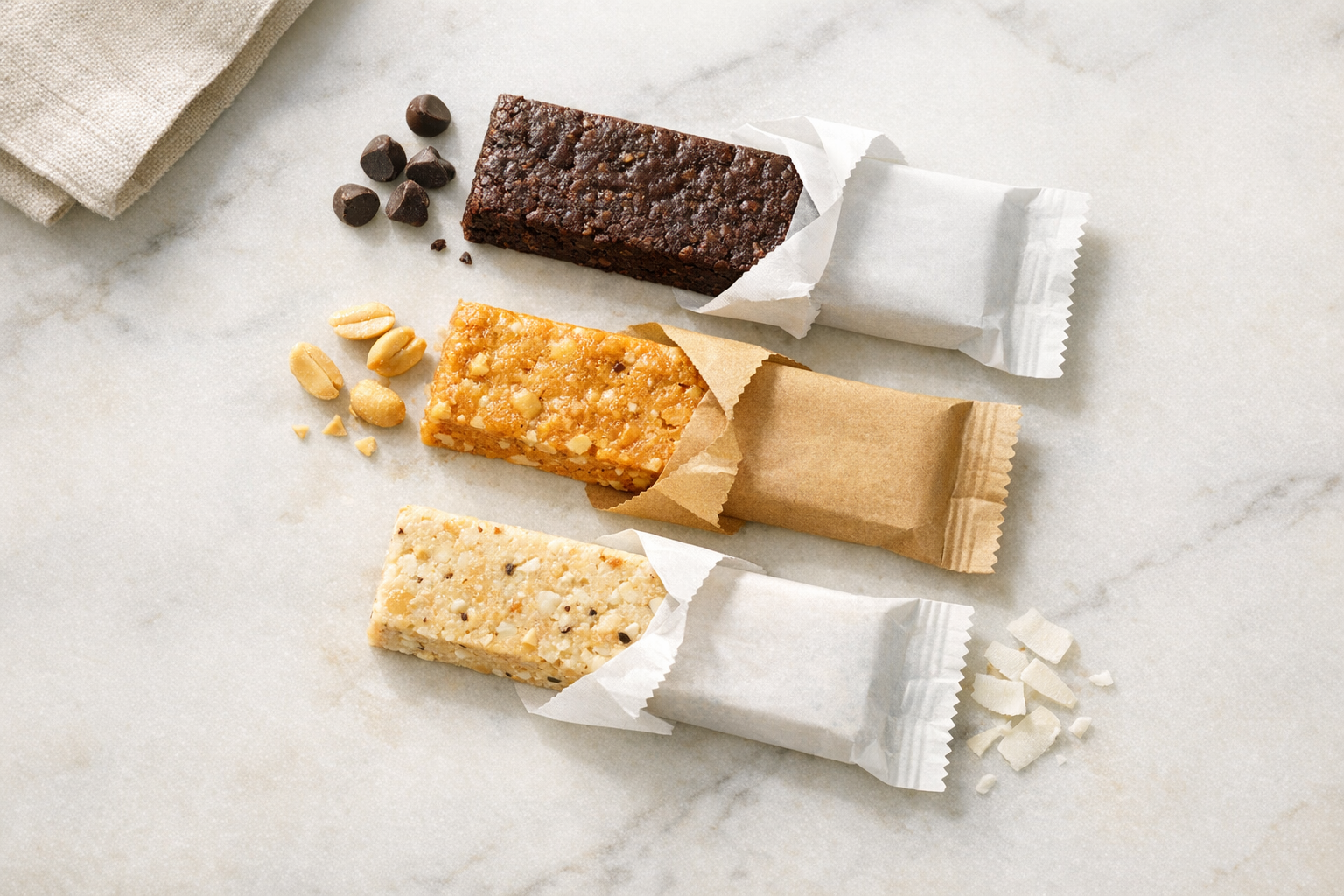
When we tested front-of-pack claims on a plant-based protein bar with 500 census-representative US consumers, the single biggest driver of purchase intent wasn’t protein content, sugar messaging, or dietary certifications. It was ingredient transparency — accounting for 26.3% of the purchase decision.
The second biggest driver was protein framing at 25.7%. But here’s what matters: the way you frame protein on pack changes everything. “11g Protein Per Bar” drove 40.4% preference. “Plant-Based Protein Power” drove 17.6%. Same product, same protein level — the specific, quantified claim outperformed the aspirational one by 2.3x.
This pattern — specificity beating aspiration — repeated across every attribute we tested. What follows is a detailed breakdown of which claims win, which don’t, and what that means for your next snack bar packaging brief.
Table of Contents
- The Experiment: How We Tested It
- What Matters Most: The Attribute Importance Hierarchy
- Ingredient Transparency: “Only 6 Ingredients” Wins by 2.5x
- Protein Framing: Grams Beat Buzzwords
- Sugar Messaging: “Less Than 8g” Outperforms Everything
- Dietary Callouts: Stack the Certifications
- Brand Tagline: It Barely Matters
- The Full Claims Comparison Table
- What This Means for Your Next Packaging Brief
The Experiment: How We Tested It
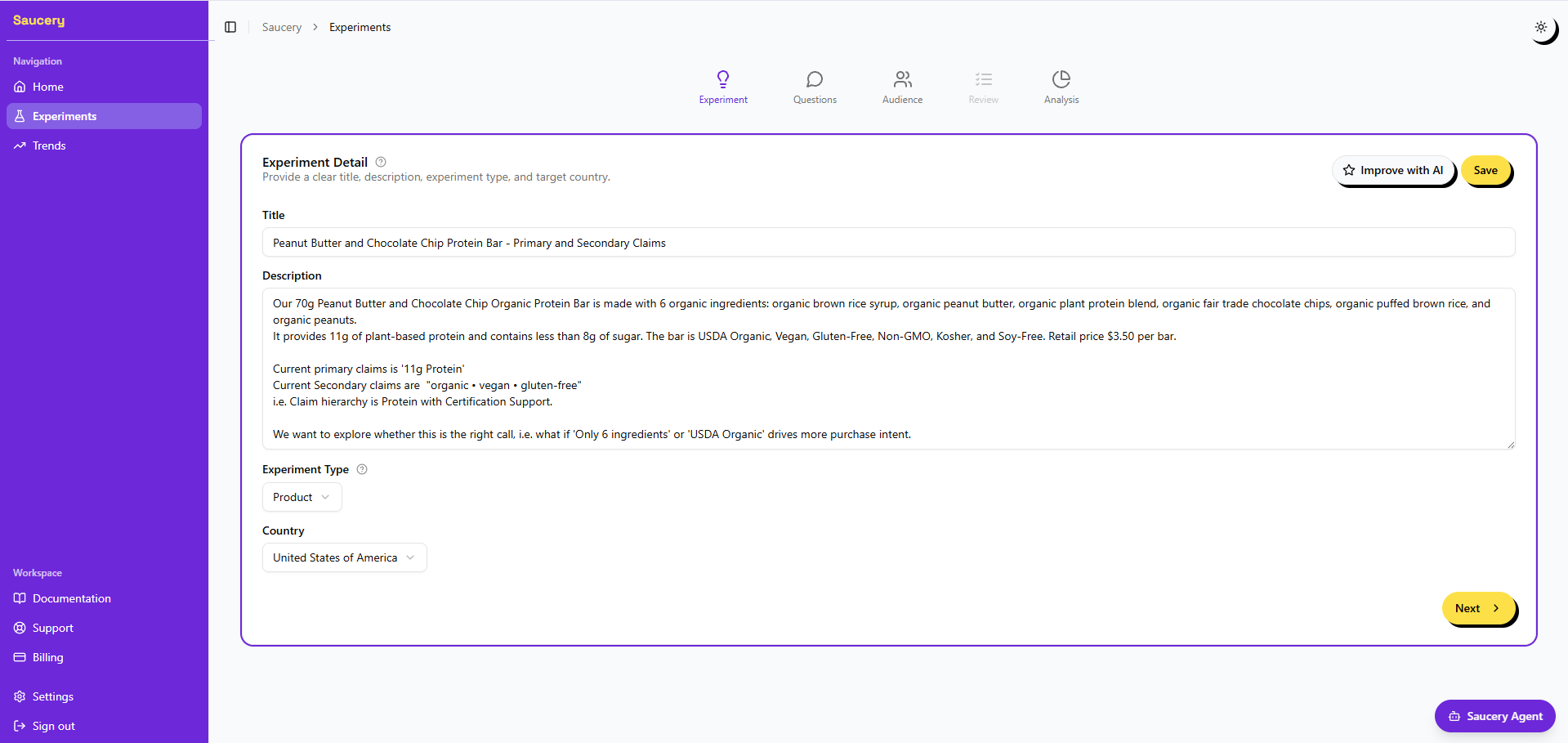
We ran a discrete choice experiment using Saucery — a synthetic consumer validation platform that uses census-backed AI personas to simulate purchase decisions. Instead of recruiting a traditional consumer panel over several weeks, we configured the experiment and had results within two hours.
The setup:
- Product: A 70g PB & Chocolate Chip Organic Protein Bar — 11g plant protein, less than 8g sugar, $3.50 retail price
- Sample: 500 AI personas modelled on US census data, representing the demographic and attitudinal spread of real consumers across all states
- Method: Randomised claim combinations across 5 attributes, each with 3–5 claim variants
- Attributes tested: Ingredient Transparency, Protein Framing, Sugar Messaging, Dietary Callouts, Brand Tagline
- Time to results: Under 2 hours from experiment setup to full analysis
Each synthetic persona was shown multiple randomised combinations of claims and selected which product they would be most likely to purchase. This isolates the effect of each individual claim on purchase intent — controlling for all other variables. The approach mirrors traditional discrete choice methodology but runs in a fraction of the time and cost.
What Matters Most: The Attribute Importance Hierarchy
Before looking at which specific claims won, it’s worth understanding how much each category of claim matters to the purchase decision. The attribute importance scores tell you where to focus your packaging real estate.
| Attribute | Importance (%) | What This Means |
|---|---|---|
| Ingredient Transparency | 26.3% | The single biggest driver — consumers want to know what’s in the bar |
| Protein Framing | 25.7% | Nearly as important as ingredients — but framing matters enormously |
| Dietary Callouts | 21.1% | Certifications and dietary claims carry real weight |
| Sugar Messaging | 19.1% | Sugar concerns are real but rank below protein and ingredients |
| Brand Tagline | 7.8% | The brand story matters least — consumers buy on claims, not slogans |
The takeaway: nearly 73% of the purchase decision is driven by just three attributes — ingredient transparency, protein framing, and dietary callouts. If your packaging brief spends equal time on all five, you’re misallocating effort.
Ingredient Transparency: “Only 6 Ingredients” Wins by 2.5x
Ingredient transparency was the top attribute, and the winning claim wasn’t close:
| Claim | Preference (%) |
|---|---|
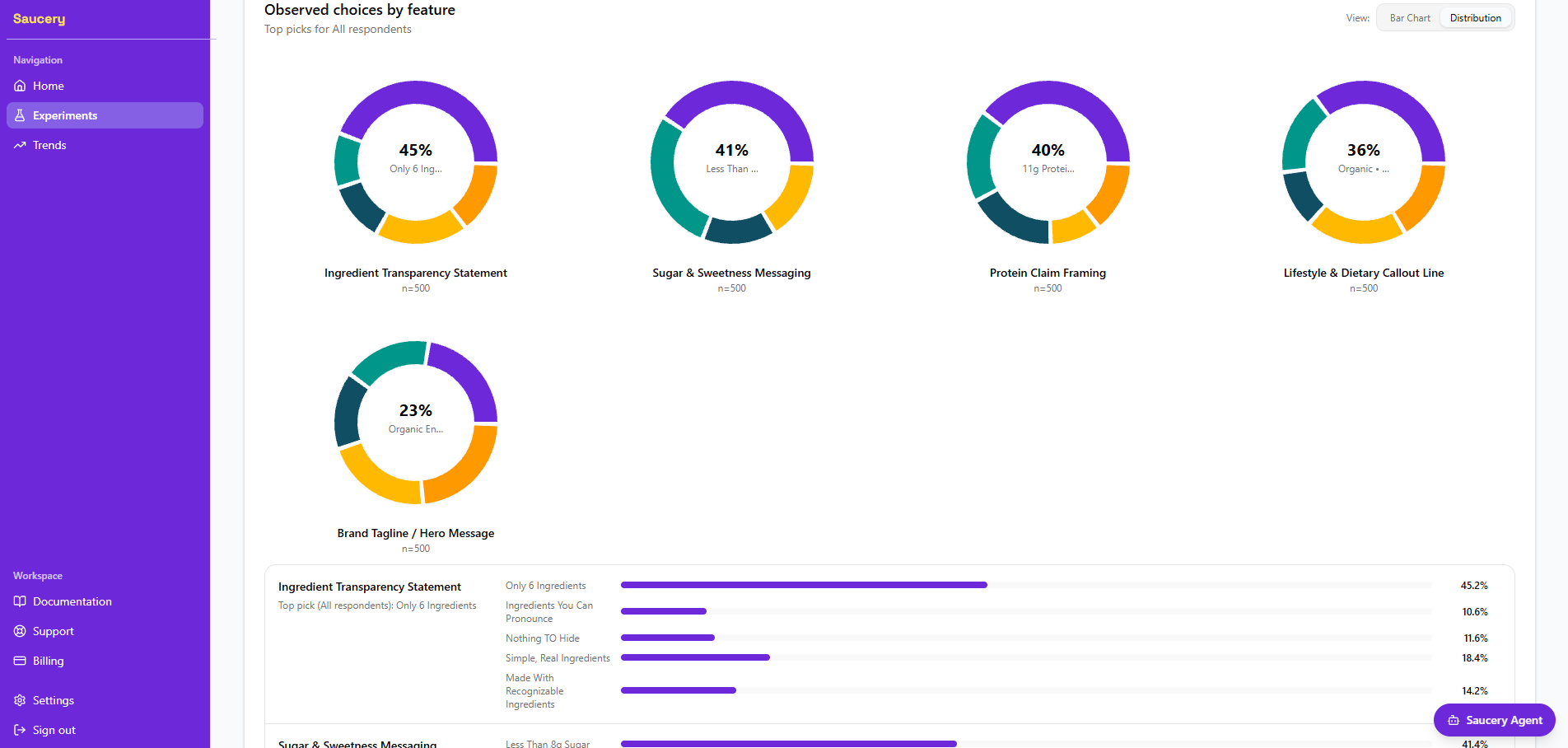
| “Only 6 Ingredients” | 45.2% |
| “Nothing Artificial, Ever” | 20.8% |
| “Simple, Real Ingredients” | 18.4% |
| “Clean Label Certified” | 15.6% |
“Only 6 Ingredients” is specific, verifiable, and concrete. Consumers can picture it. “Simple, Real Ingredients” says essentially the same thing but in vague, marketing-speak terms — and it scored less than half as well.
This is a pattern we see repeatedly: quantified, specific claims outperform aspirational ones. The consumer doesn’t need to be convinced that simple ingredients are good. They need to be shown exactly how simple yours are.
Protein Framing: Grams Beat Buzzwords
High protein snacks are one of the fastest-growing segments in the snack bar category. But how you communicate protein on pack makes a dramatic difference:
| Claim | Preference (%) |
|---|---|
| “11g Protein Per Bar” | 40.4% |
| “Complete Amino Acid Profile” | 22.2% |
| “Fuel Your Day with Protein” | 19.8% |
| “Plant-Based Protein Power” | 17.6% |
The gap between first and last is 2.3x. “11g Protein Per Bar” tells the consumer exactly what they’re getting. “Plant-Based Protein Power” tells them how you want them to feel about it. Consumers chose information over inspiration.
For brands like GoMacro, Aloha, and Verb Energy competing in the high protein snacks space, this has direct packaging implications. If your front-of-pack leads with a protein story rather than protein content, you may be leaving preference on the table.
Sugar Messaging: “Less Than 8g” Outperforms Everything
Low sugar snacks are increasingly important to consumers, and the sugar messaging results followed the same specificity pattern:
| Claim | Preference (%) |
|---|---|
| “Less Than 8g Sugar” | 41.4% |
| “No Added Sugar” | 24.8% |
| “Naturally Sweetened” | 19.0% |
| “Smart Sweetness, No Compromise” | 14.8% |
“Less Than 8g Sugar” is another quantified, specific claim — and it won decisively. “Naturally Sweetened” is pleasant but vague. “Smart Sweetness, No Compromise” is pure marketing copy, and it came last.
One nuance worth noting: “No Added Sugar” performed respectably at 24.8%. This claim has regulatory meaning and communicates a specific product attribute. It sits between the quantified claim and the aspirational ones — which is exactly where you’d expect it.
Dietary Callouts: Stack the Certifications
| Claim | Preference (%) |
|---|---|
| “Organic • Vegan • Gluten-Free” | 36.0% |
| “USDA Organic Certified” | 25.6% |
| “Non-GMO Project Verified” | 22.2% |
| “Made With Superfoods” | 16.2% |
The stacked certification claim — “Organic • Vegan • Gluten-Free” — won comfortably. This makes sense: each certification addresses a different consumer concern, and stacking them broadens the appeal without diluting any single claim.
“Made With Superfoods” came last. It’s the only claim in the set that isn’t verifiable or regulated — and consumers seem to recognise the difference. Clean label protein bars benefit from claims that are specific and auditable.
Brand Tagline: It Barely Matters
At just 7.8% attribute importance, the brand tagline had the smallest influence on purchase intent. The winning tagline — “Organic Energy, Simplified” at 23.4% — still followed the specificity pattern, but the overall category mattered so little that the difference between best and worst tagline had minimal commercial impact.
This doesn’t mean branding is irrelevant. It means that at the point of purchase, for a new or unfamiliar product, front-of-pack claims do the heavy lifting. Brand affinity is built over time through repeat purchase, not captured at trial through a tagline.
The Full Claims Comparison Table
For reference, here’s the complete results table (n=500, census-representative US synthetic consumers):
| Attribute | Importance | Winning Claim | Win % | Lowest Claim | Low % |
|---|---|---|---|---|---|
| Ingredient Transparency | 26.3% | “Only 6 Ingredients” | 45.2% | “Clean Label Certified” | 15.6% |
| Protein Framing | 25.7% | “11g Protein Per Bar” | 40.4% | “Plant-Based Protein Power” | 17.6% |
| Dietary Callouts | 21.1% | “Organic • Vegan • GF” | 36.0% | “Made With Superfoods” | 16.2% |
| Sugar Messaging | 19.1% | “Less Than 8g Sugar” | 41.4% | “Smart Sweetness, No Compromise” | 14.8% |
| Brand Tagline | 7.8% | “Organic Energy, Simplified” | 23.4% | “Power Your Purpose” | 21.2% |
What This Means for Your Next Packaging Brief
- Lead with a specific number. Whether it’s protein grams, ingredient count, or sugar content — put the most specific, quantified claim in the most prominent position on pack. “11g Protein Per Bar” beats “High Protein” every time.
- Prioritise ingredient transparency. It’s the #1 driver at 26.3%. If your bar has a short ingredient list, say exactly how short. “Only 6 Ingredients” is a stronger claim than most brands realise.
- Stack your dietary certifications. “Organic • Vegan • Gluten-Free” outperformed any single certification. If you hold multiple certifications, display them together rather than choosing one to feature.
- Quantify your sugar claim. “Less Than 8g Sugar” outperformed “No Added Sugar,” “Naturally Sweetened,” and every aspirational variant. Consumers in the low sugar snacks segment want a number, not a narrative.
- Don’t over-invest in tagline development. At 7.8% importance, your tagline has roughly one-third the influence of your ingredient transparency claim. Spend the creative budget on claims testing instead.
- Test before you print. The gaps in this experiment were large — 2x to 3x between best and worst claims. These are differences that directly affect shelf velocity. Running a synthetic consumer experiment like this one takes under two hours and costs a fraction of a packaging reprint. Try it on your own product.
Test Your Front-of-Pack Claims
The data above is from a single product in a single category. Your product, your consumers, and your competitive set are different. The principle holds — specific beats aspirational — but the winning claims for your bar, chip, or puff need to be tested directly. Saucery runs claims validation experiments with 500+ census-backed synthetic consumers — typically in under two hours, at a fraction of the cost of traditional consumer panels. Start a free experiment.