Pistachio Milk in 2026: Where It Wins (and How to Validate Fast)
Pistachio milk is one of the few plant-based milks that can signal “premium” without needing functional claims. That’s the upside. The downside is it can get boxed into a niche “treat” unless you anchor it to an occasion people already buy for.
This post covers:
- the occasions where pistachio milk has the clearest right-to-win
- the positioning choices that make it legible in 2 seconds
- a fast validation plan before you invest in scale
What pistachio milk is (and what it isn’t)
Pistachio milk tends to win when people want one or more of these cues:
- a distinct, dessert-adjacent flavor
- a “premium ingredient” story (pistachio feels intentional)
- a milk alternative that doesn’t taste like a direct swap for oat/almond
It’s not automatically an everyday substitute. It needs a job.
The big mistake: trying to “win the category”
Plant-based milk choices are often occasion-based:
- “this is my coffee milk”
- “this is my cereal milk”
- “this is my cooking milk”
- “this is my treat milk”
So the practical question isn’t “can pistachio beat oat?”
It’s: which occasion can pistachio own—and what will it replace in that moment?
Where pistachio milk can win in 2026 (3 occasions worth testing first)
1) Coffee (barista performance)
If you can deliver foam, texture, and a flavor that pairs with espresso (without overpowering it), pistachio becomes a “coffee upgrade.”
Positioning angles to test:
- “Barista Blend” (texture/foam promise)
- “Café-style pistachio latte at home”
- “Less sweet, more nut-forward”
Benchmark to learn from: MILKLAB.
2) Dessert + indulgence (treat occasions)
Pistachio is already a dessert flavor in many markets (gelato, pastries, chocolates). That gives you immediate mental availability.
Positioning angles to test:
- “Dessert milk” (smoothies, cereal, baking)
- “Pistachio + vanilla” as the default entry point
- “Naturally sweet” variants (only if it keeps the taste clean)
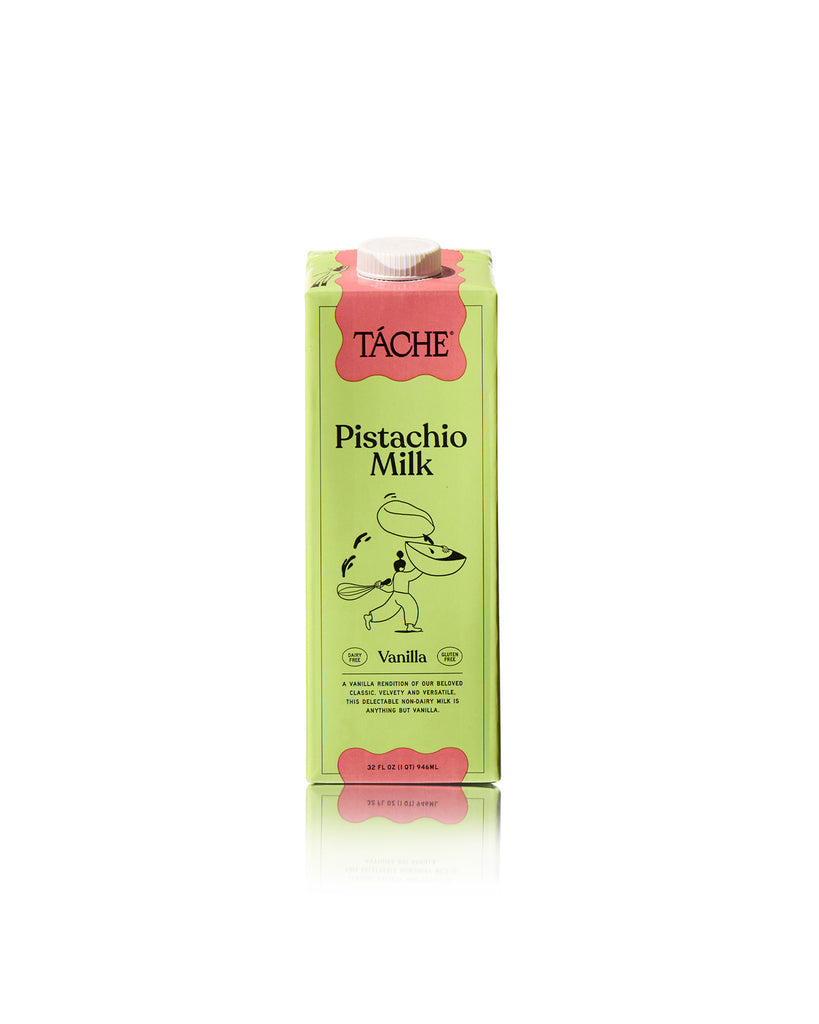
Brand example: Táche.
3) Culinary + cooking (savory credibility)
This is the hardest to win but potentially the most defensible if you can prove performance under heat and avoid clashing flavors.
Positioning angles to test:
- “Unsweetened cooking base”
- “Creamy texture for sauces and soups”
- “Chef-friendly” (foodservice angle)
The fast validation plan (what to test before you launch)
Before you decide on packaging or a full product line, make three decisions:
- Occasion (coffee vs dessert vs cooking)
- Positioning (premium treat vs performance vs culinary)
- Form (carton, barista edition, RTD latte, concentrate, ingredient base)
Then test concepts quickly:
- Create 10–20 concept variations (same base, different occasion/positioning)
- Ask consumers:
- “When would you buy this?”
- “What would you replace with it?”
- “What would stop you?”
- “What price would you expect?”
- Score concepts on:
- clarity (“I get it in 2 seconds”)
- replacement behavior (what it steals from)
- taste expectation fit
- market differences (if you’re launching multi-market)
If you want a faster go/no-go for your 2026 pipeline, see how we approach synthetic concept testing here.
10 concept seeds to test (not final products)
- Pistachio Barista Blend (foam/texture promise)
- Pistachio + Vanilla Dessert Milk (smoothies, cereal, dessert recipes)
- Pistachio + Cardamom (premium café cue)
- Pistachio + Date (naturally sweet positioning)
- Unsweetened Pistachio Cooking Base (savory applications)
- Pistachio RTD Latte (classic café use-case)
- Pistachio Matcha Latte RTD (trend pairing; test polarization)
- Pistachio Soft-Serve / shake base (foodservice ingredient)
- “Light” pistachio (everyday positioning; test whether it dilutes the premium cue)
- Pistachio + cocoa (dessert adjacency; test for divisiveness)
What to do next
If you’re considering pistachio milk for a 2026 launch, the safest path is:
- pick one primary occasion to win
- test multiple concept angles quickly
- commit only once you have a clear replacement story and positioning that lands immediately
For broader context on why traditional research slows food innovation—and how AI can compress timelines—this is a useful read here.
If you’re planning a 2026 launch and want to pressure-test concepts quickly, you can apply to our Early Adoption program here.